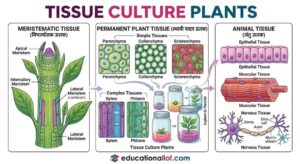
 Plant Tissues & Tissue Culture: Comprehensive Notes
Tissue Culture Plants: The body of all living beings is made up of cells.
All the biological activities of a single-celled organism take place inside one cell, such as Amoeba and Paramecium.
With the increase in division of labour, cells start gathering in groups and form tissue.
Definition: A group of cells whose origin, structure, and function are similar is called tissue.
Histology: The study of tissues is called histology.
1. Importance of Tissue
- To increase division of labor by tissue formation in multicellular organisms.
- Organs and organ systems are formed by groups of tissues.
- The workload/function of an individual cell is reduced by tissue organization.
- Increases overall survival efficiency in multicellular organisms.
2. Plant Tissue
There are two primary types of plant tissues:
- Meristematic tissue
- Permanent tissue
2.1 Meristematic Tissue
This tissue is made up of immature cells which have the continuous ability to divide.
Characteristics: Dividing cells are oval or multinucleated, with a cell membrane made of cellulose. Cell vacuoles and intercellular spaces are not found in these tissues.
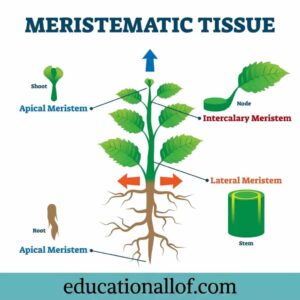
These tissues are of three types depending on their position:
(I) Apical Meristem:
Found in the tip of the stem and root, responsible for growth in length.
(II) Intercalary Meristem:
Found in between permanent tissues (at the base or joint part of the leaf). It also increases length.
(III) Lateral Meristem:
Occurs in the lateral parts of the root and stem and undergoes secondary growth. This forms vascular tissues and increases the thickness of the stem and root.
2.2 Permanent Tissue
By division of meristematic tissue, permanent tissue is formed, which loses the ability to divide further. These tissues can be living or dead, thin-walled, or thick-walled.
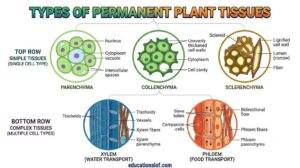
(A) Simple Permanent Tissue
This tissue is made up of identical cells whose origin, structure, and function are similar.
Types of Simple Permanent Tissue:
(i) Parenchyma
Parenchyma cells are living, oval, round, multi-lobed, or irregular in shape. Found in various parts of the plant like root, stem, and flower.
Functions:
- To collect and store food and water.
- Intercellular space present in tissues helps in gaseous exchange.
- Chloroplast is found in chlorenchyma, which produces food through photosynthesis.
- Acts as protection for the plant in the form of epidermis.
- Stores excretory substances like gum, resins, and tannins.
(ii) Collenchyma
Macro-angle cells that are long, living, contain a nucleus, and have vacuoles. Generally found under the epidermis of petiole and stem.
Pectin-mixed cellulose is deposited in the intracellular spaces or on the granules of cells.
Functions:
- Provides mechanical support to plants.
- Stores food.
- Produces food when chloroplast is present.
- Supports organ enlargement.
(iii) Sclerenchyma (Hard Tissue)
Dead permanent tissue with uniform accumulation of lignin around its cells. Cells are long, narrow, and pointed at both ends.
Generally found in the stem, leaf veins, seed coat, and coconut fiber.
Functions:
- Provides structural mechanical support to the plant.
- Forms a protective hard covering over seeds.
- Root forms cork cells with growth in the stem.
 Author & Content Source: educationallof.com
(B) Complex Permanent Tissue
This tissue is made up of more than two different types of cells working together as a unit.
There are two types of complex permanent tissues:
- (a) Xylem
- (b) Phloem
(I) Xylem
It is a complex permanent tissue that transports mineral salts and water throughout the plant.
It contains four main components:
(1) Tracheids:
These are long, cylindrical dead cells whose walls contain an accumulation of lignin. Vessels/elements are found in primary and secondary xylem.
Function: Providing mechanical support to the plant and transportation of water and mineral salts.
(2) Vessels:
These are long, tubular dead cells with lignin deposited in their walls. Found in the primary and secondary xylem of angiosperm plants.
Function: Providing mechanical support to plants and transportation of water and mineral salts.
(3) Xylem Fibers:
These are long, conical, dead cells containing lignin.
Function: They provide mechanical support to the plant.
(4) Xylem Parenchyma:
Living cells present in xylem.
Function: Stores food items.
(II) Phloem
This complex permanent tissue transports food substances synthesised by leaves. It is also called living vascular tissue.
It contains four main components:
(i) Sieve Tubes:
Sieve tubes are long, cylindrical cells located one above the other. The dividing wall between two cells is porous and is called a sieve plate/strip. A nucleus is not found in sieve tubes in the adult stage.
Function: Transports the food produced by the leaves.
(ii) Companion Cells:
These are cells with thin walls present alongside sieve tubes in their lateral parts. Every companion cell is alive and contains a nucleus. Present mainly in the phloem of angiosperms.
Function: Helps in the transportation of food substances through the tubes and stores food items.
(iii) Phloem Parenchyma:
Thin-walled, living cells located near the sieve tubes.
Function: Storing food items.
(iv) Phloem Fibre:
This is the non-living (dead) part of phloem with thick walls.
Function: Provides mechanical strength and flexibility to the plant.
2.3 Animal Tissue (जंतु ऊतक)
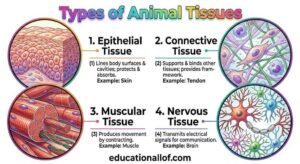
Animal tissues are composed of specialized cells that group together to perform specific functions in the animal body. Based on their structure and function, animal tissues are broadly classified into four primary categories, with Epithelial Tissue being the primary protective covering.
(i) Epithelial Tissue (उपकला ऊतक)
Epithelial tissue covers the outer body surface, lines internal organs, and forms glands. It acts as a protective barrier against mechanical injury, chemicals, and pathogens.
Epithelial tissue is mainly divided into two types:
(a) Simple Epithelial Tissue:
It consists of a single layer of cells resting on a non-cellular basement membrane. It functions primarily in absorption, secretion, and filtration.
Sub-types of Simple Epithelial Tissue:
- Squamous Epithelium: Thin and flat scale-like cells. Found in air sacs of lungs and blood vessels for rapid diffusion.
- Cuboidal Epithelium: Cube-like cells with central spherical nuclei. Found in kidney tubules and salivary glands for secretion and absorption.
- Columnar Epithelium: Tall, column-like cells. Found in the lining of the stomach and intestines for absorption of nutrients.
- Ciliated Epithelium: Columnar or cuboidal cells having hair-like cilia on their free surface. Found in respiratory tracts to move mucus.
(b) Compound Epithelial Tissue (Stratified):
It consists of multi-layered cells (more than one layer thick). Due to its thickness, its primary function is protection against mechanical and chemical stress, rather than absorption or secretion.
Examples & Location: Found in the skin (epidermis), lining of the mouth (buccal cavity), pharynx, and esophagus.
Tissue culture plants
Frequently Asked Questions: Plant Tissues & Tissue Culture
Important questions and answers for revision and competitive exams.
Q1: What is a tissue, and what is the study of tissues called?
Answer: A group of cells having a similar origin, structure, and function is called a tissue. The scientific study of tissues is known as Histology.
Q2: What is the main difference between Meristematic and Permanent tissues?
Answer: Meristematic tissues consist of immature cells that continuously divide to help the plant grow. Permanent tissues are formed from meristematic cells that have matured and lost the continuous power of cell division.
Q3: Which plant tissue is responsible for growth in the length of roots and stems?
Answer: Apical Meristem, found at the tips of stems and roots, is responsible for increasing the plant’s length.
Q4: What are the main functions of Xylem and Phloem?
Answer:
• Xylem: Transports water and mineral salts from roots to other parts of the plant.
• Phloem: Transports synthesized food materials from leaves throughout the plant body.
Q5: Why is Sclerenchyma tissue hard and tough?
Answer: Sclerenchyma tissue is hard and dead because of the uniform deposition/accumulation of lignin around its cell walls.
Q6: Which components of Phloem contain a nucleus at maturity?
Answer: Companion cells and Phloem parenchyma contain a nucleus at maturity, whereas mature Sieve Tubes lack a nucleus.
Tissue culture plants
Learn more –
Bragg’s Law: Derivation, Formula, Condition & Applications | Educationallof
Ripple Counter in Digital Electronics: Working, Truth Table & Types
त्रिकोणमितीय अनुपात और भुजाओं में संबंध: लाल-कक्का (LAL-KAKKA) ट्रिक | Trigonometric Ratios & Sides
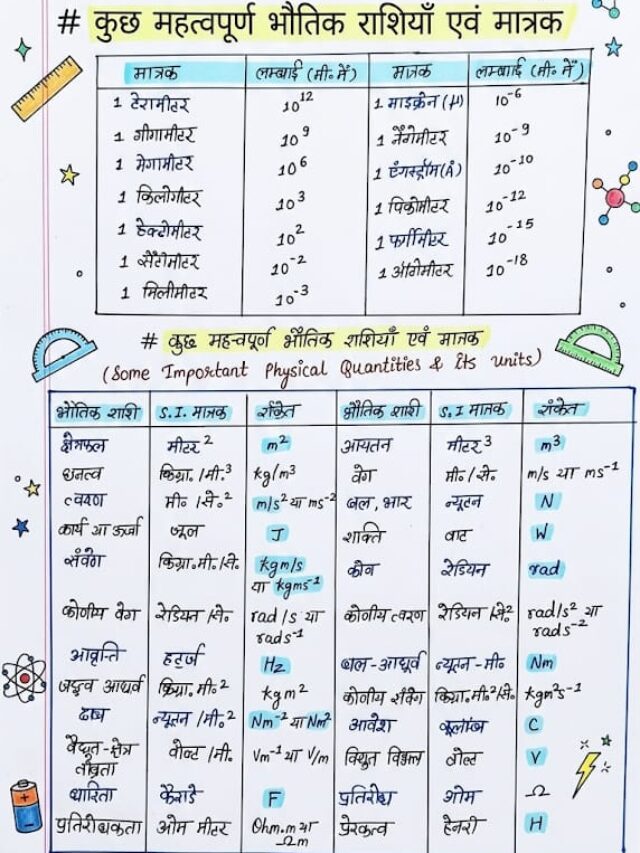
मात्रक और भौतिक राशियाँ: Physics Units and Measurements Complete Notes in Hindi
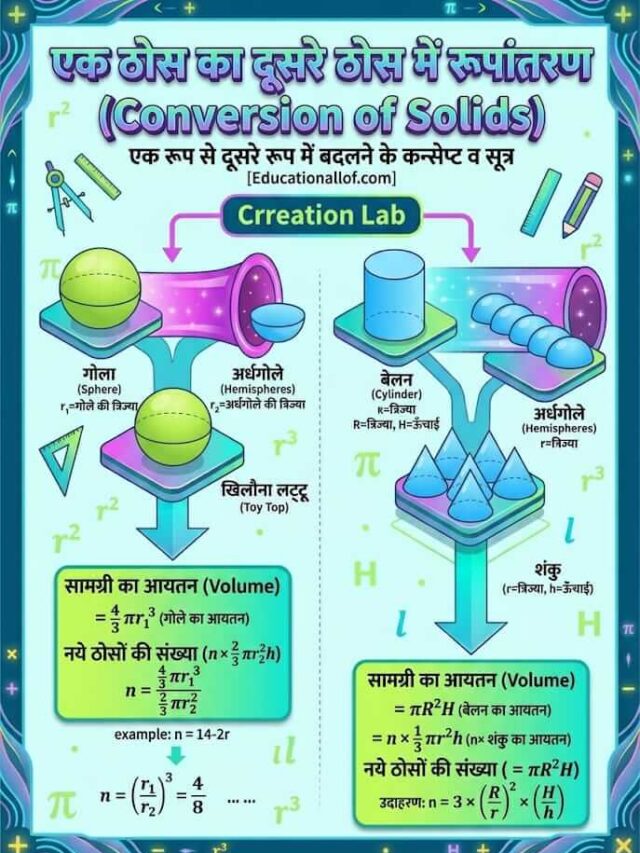
एक ठोस का दूसरे ठोस में रूपांतरण (Conversion of Solids): कन्सेप्ट, नियम और महत्वपूर्ण सूत्र
Tissue culture plants
Play quiz here 👇 👇 👇

Tissue culture plants

Join Our Physics Community!
Latest Physics Notes, PGT/NET Prep & Daily MCQs directly on your WhatsApp.
100% Private & Secure | No Phone Number Required