Table of Contents
ToggleCell Organelles: Complete Structure, Functions & Lab Activities
Mitochondria structure – An In-Depth Comprehensive Guide on Mitochondria, Golgi Apparatus, Lysosome, Centrosome, and Nucleus
Table of Contents
- 1. Mitochondria Structure & Functions
- 1.1. Mitochondria Definition & Powerhouse Concept
- 1.1.1. Mitochondria Structure (Double Membrane & Cristae)
- 1.1.2. Functions of Mitochondria
- 1.2. Golgi Body (Golgi Apparatus)
- 1.2.1. Golgi Body Structure
- 1.2.1.1. Cisternae
- 1.2.1.2. Vesicles
- 1.2.1.3. Vacuoles
- 1.2.2. Functions of Golgi Body
- 1.2.1. Golgi Body Structure
- 1.3. Lysosome
- 1.3.1. Lysosome Concept & Suicide Bag Explanation
- 1.3.2. Functions of Lysosomes
- 2. Centrosome
- 2.1. Centrosome Structure & Parts
- 2.2. Functions of Centrosome
- 3. Nucleus
- 3.1. Structure of Nucleus
- 3.1.1. Nuclear Membrane
- 3.1.2. Nucleoplasm
- 3.1.3. Nucleolus
- 3.1.4. Chromatin Network & Chromosomes
- 3.2. Functions of Nucleus
- 3.3. Laboratory Activities (Microscopic Observations)
- 3.1. Structure of Nucleus
1. Mitochondria Structure & Functions
1.1. Mitochondria
It is a two-layered organelle found in the cytoplasm of eukaryotic cells. Mitochondria are indispensable organelles responsible for generating chemical energy necessary for various biochemical reactions within the cell.
Key Exception Note: R.B.C. (Red Blood Corpuscles) of mammals Mitochondria are not found in. Mammalian mature RBCs lack mitochondria to maximize space for hemoglobin and prevent oxygen consumption during transport.
Generally it is called the power house of the cell because by completely oxidizing the food, A.T.P. Releases energy in the form of.
ATP in the body Energy is stored in the form of energy, hence it is called energy currency. Adenosine Triphosphate (ATP) acts as the biological value currency storing energy in its high-energy phosphate bonds.
1.1.1. Mitochondria Structure
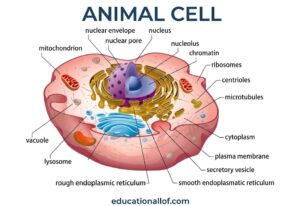
Mitochondria are structures surrounded by a double membrane. The outer membrane is smooth, while the inner membrane exhibits complex folds.
The cavity of mitochondria surrounded by outer and inner membrane is filled with matrix. This matrix contains a viscous solution rich in proteins and biochemical enzymes.
Many processes emerge from the inner membrane and hang in the matrix, which are called cristae. These finger-like projections significantly increase the surface area available for chemical reactions such as electron transport systems.
DNA, ribosomes and enzymes are found in the matrix. Because mitochondria contain their own circular DNA and 70S ribosomes, they are semi-autonomous organelles capable of synthesizing some of their own proteins.
1.1.2. Function of Mitochondria
- (1) Cellular Respiration & Energy Production: It is the site of cellular respiration. ATP energy is produced. Mitochondria convert nutrients into adenosine triphosphate through Krebs cycle and oxidative phosphorylation.
- (2) Biosynthetic Mediator: Acts as a mediator in the synthesis of amino acids and steroids. They provide crucial metabolic intermediates necessary for non-essential amino acid cellular pathways and steroid hormone biosynthesis.
1.2. Golgi Body (Golgi Apparatus)
It is also called Golgi apparatus. First described in detail by Camillo Golgi, it acts as the packaging and shipping unit of the eukaryotic cell.
Plant cells are called dictyosomes. In plant cells, the Golgi apparatus appears as individual, scattered subunits rather than a single large complex.
Distribution Rule: It is found in all eukaryotic cells But RBC is not found in. Similar to mitochondria, mature red blood cells lack Golgi apparatus.
1.2.1. Golgi Body Structure
Three types of smooth membrane structures are found in it:
- 1.2.1.1. (1) Cisternae – Has a structure similar to parallel flat sacs. These are stacked membrane-bound fluid-filled sacs arranged in parallel fashion.
- 1.2.1.2. (2) Vesicles – Are small round structures. These are tiny membrane-bound spheres that bud off from cisternae carrying processed materials.
- 1.2.1.3. (3) Vacuoles – These are large round structures. They are expanded membrane-bound spaces functioning in modified protein storage.
1.2.2. Function of Golgi Body
- (1) Secretion: It is the main secretory organ of the cell. It collects, modifies, packages, and secretes cellular products.
- (2) Cellular Transport: Works to transport substances in and out of the cell. Functions as the primary post-office / dispatch center of cell trafficking.
- (3) Organelle Synthesis: Synthesizes lysosomes and peroxisomes. Plays an active role in forming primary lysosomes through budding.
- (4) Carbohydrate Synthesis: Forms complex sugars from simple sugars. Responsible for glycosylation and production of non-cellulosic polysaccharides.
1.3. Lysosome (“Suicide Bag”)
These were discovered by a scientist named Christian de Duve in 1964. (Note: De Duve received Nobel recognition for his discovery of cell organelle structures).
These are microscopic, round, sac-like structures surrounded by a single membrane. Unlike mitochondria, lysosomes are bounded by only one lipid bilayer.
Enzymes are found inside them. There are special catalysts found in living organisms which increase the speed of biological processes (hydrolytic digestive enzymes like acid phosphatases, lipases, proteases, nucleases).
The enzymes found in lysosomes are decomposers and digest various substances. They break down biological macromolecules, cellular debris, and engulfed cellular pathogens.
Why is Lysosome called the “Suicide Bag”?
Some bacteria/damaged conditions even digest the organelles of their own cell, due to which the cell itself gets destroyed. The useless cells of the body are destroyed in this way. For this reason lysosome is also called “suicide bag”.
1.3.1. Functions of Lysosome
- (1) Foreign Substance Consumption: They consume foreign substances that enter the cell. They act as microscopic defense mechanisms against bacteria, viruses, and toxins via phagocytosis.
- (2) Cellular Cleaning & Waste Disposal: They clean the cells by eating dead and old cells (Autophagy and Autolysis). They help recycle old intracellular components.
2. Centrosome
This is the organelle located in the cytoplasm near the nucleus which is made up of two parts:
- (1) Centroid pericentre / Pericentriolar matrix
- (2) Centroid nucleus / Centrioles pair
The pericentre (centrosphere) of the star is a colourless, clean circle inside which two microscopic particles called centra (centrioles) are found.
Stellate body (aster arrangement) is often found in animal cells. But some of it is also found in plant cells, in fungi and algae.
During cell division the centrosome also gets divided into two parts. Each pair migrates towards opposite poles of the dividing cell.
2.1. Functions of Centrosome
- (1) Regulation of Division: To help in cell division (regulation of cell division cycle).
- (2) Spindle Formation: It helps in the formation of spindle apparatus during division of animal cells. Spindle fibers attach to chromosome kinetochores to pull sister chromatids apart.
2.2. Nucleus (The Master Organelle)
Large, round structures are found in the cytoplasm, which is called nucleus. Discovered by Robert Brown in 1831, the nucleus functions as the controlling center or brain of the cell.
There are four main parts of the nucleus:
2.2.1. Parts of Nucleus
- 2.2.1. (1) Nuclear Membrane (Karyotheca) – A two-layered membrane is found around the nucleus. Which is made of lipo-protein (lipid and protein complex). It contains nuclear pores for controlled transport of mRNA and ribosome subunits.
- 2.2.2. (2) Nucleoplasm (Karyolymph) – This is a liquid containing chromosome and nucleolus. A transparent, gelatinous matrix providing fluid medium for nuclear components.
- 2.2.3. (3) Nucleolus – There is a small round structure inside the nucleus which is called nucleolus. There is no membrane in the nucleolus. It is the site for active ribosomal RNA (rRNA) synthesis.
Cell Organelles – Important Practice Questions & Answers
Key Conceptual & Exam-Oriented Questions on Mitochondria, Golgi Apparatus, Lysosome, Centrosome, and Nucleus
Q1. Why is Mitochondria called the “Powerhouse of the Cell”, and why are they absent in mammalian R.B.Cs?
Answer:
Mitochondria are known as the “Powerhouse of the Cell” because they carry out cellular respiration by completely oxidizing nutrient molecules and generating energy stored in the form of ATP (Adenosine Triphosphate). ATP serves as the biological energy currency used by cells to perform vital metabolic activities.
Q2. What are the structural components of the Golgi Apparatus, and what is its primary function?
Answer:
The Golgi Body (also called dictyosome in plant cells) consists of three smooth membrane-bound structural components:
- Cisternae: Parallel, flattened sac-like structures.
- Vesicles: Small round structures for transport.
- Vacuoles: Large spherical storage units.
Primary Functions: It acts as the cell’s main secretory and packaging organelle, transporting substances in and out of the cell, synthesizing complex sugars from simple sugars, and forming lysosomes and peroxisomes.
Q3. Why are Lysosomes referred to as the “Suicide Bags” of the cell? Who discovered them?
Answer:
Lysosomes were discovered by the scientist Christian de Duve in 1964. They are single-membrane spherical sacs containing powerful hydrolytic digestive enzymes.
Q4. What is the role of Centrosome in animal cell division?
Answer:
The Centrosome is an organelle located near the nucleus in the cytoplasm. It consists of a clear pericentre (centrosphere) containing two microscopic rod-like structures called centra (centrioles).
During animal cell division, the centrosome divides into two parts and moves toward opposite poles of the cell. It regulates cell cycle division and aids in the formation of spindle fibers, which pull chromosomes apart during nuclear division.
Q5. Describe the structural parts of the Nucleus and its major functions.
Answer:
The Nucleus is surrounded by a two-layered Nuclear Membrane made of lipo-protein. It contains four major parts:
- Nuclear Membrane: Double-layered protective boundary with pores.
- Nucleoplasm: Gelatinous fluid bathing chromosomes and the nucleolus.
- Nucleolus: Non-membrane round structure that synthesizes RNA.
- Chromatin Network: Thread-like structures that condense into thick chromosomes during cell division.
Functions: Controls metabolic activities of the cell, regulates the cell cycle, synthesizes RNA, and transmits genetic traits from parents to offspring.
Learn more –
Mendel’s Laws of Inheritance Explained: Principles, Experiments & 7 Traits (Genetics Notes)
Plant Tissues & Tissue Culture Notes: Classification, Types & Functions | educationallof
Bragg’s Law: Derivation, Formula, Condition & Applications | Educationallof
Ripple Counter in Digital Electronics: Working, Truth Table & Types
Essay on My Hobby (100, 200, 500 & 1000 Words in English)
Essay on Mahatma Gandhi: Life, History, Philosophy & Freedom Struggle
Mitochondria structure
Play quiz here 👇👇

Mitochondria structure

Join Our Physics Community!
Latest Physics Notes, PGT/NET Prep & Daily MCQs directly on your WhatsApp.
100% Private & Secure | No Phone Number Required